
About the project
The project is implemented within the framework of the International Atomic Energy Agency Coordinated Research Project in Radiation Metrology E24026 (2025–2028). This program is directed towards strengthening academic capacity in low- and middle-income countries through doctoral research focused on advanced dosimetric methodologies.
A central objective is the preparation of highly qualified specialists capable of transferring knowledge to future generations, while fostering sustainable international cooperation.
In the broader context, the initiative contributes to the reliability of radiation measurements and the enhancement of safety and effectiveness in medical applications of ionizing radiation.
Project summary
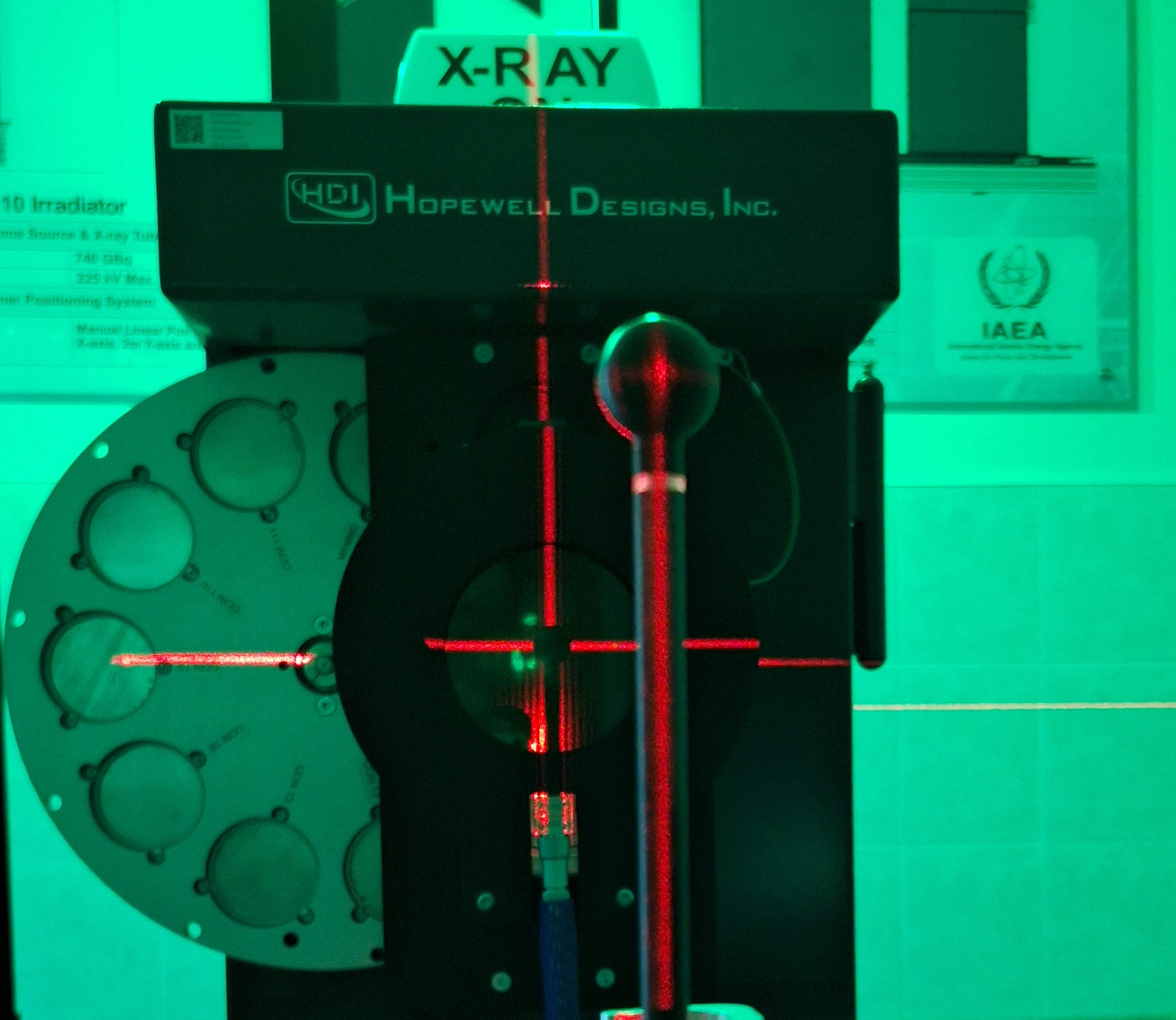
The project aims to establish and maintain traceability for dosimeters using ionization chambers and semiconductor detectors applied in diagnostic X-ray imaging in Uzbekistan. Creating this framework will enable national calibration services and support regional knowledge transfer in radiation metrology across Central Asia.
Research will focus on reproducing clinical X-ray fields in a calibration laboratory, improving accuracy, reducing measurement uncertainties, and extending radiation qualities to better reflect medical practice. The study will also refine calibration procedures, identify shortcomings in current approaches, and provide guidance for healthcare professionals.
Ultimately, the project will strengthen accuracy and traceability of key dosimetric quantities — air kerma, air kerma length product, air kerma area product, practical peak voltage, total filtration, and half-value layer — thereby improving patient safety and medical imaging quality in the region.
Implementing Institution
The project is being implemented by the Uzbek National Institute of Metrology in Uzbekistan, in cooperation with the International Atomic Energy Agency under the framework of the Coordinated Research Project. The implementing institution serves as the national host laboratory, responsible for conducting research, developing calibration methodologies, and ensuring the establishment of traceability for diagnostic radiology dosimetry in Uzbekistan.
Expected Outcomes

Development of National Calibration Procedures
Creation of standardized calibration methods for diagnostic radiology dosimeters in accordance with recommendations from international initiatives, including the IAEA TRS-457 update project and the EURAMET 22NRM01 TraMeXI project.

Establishment of New Radiation Qualities
Introduction of additional reference radiation qualities in calibration laboratories to more accurately reflect the spectrum of X-ray beams used in clinical practice.

Provision of Traceability for Key Dosimetric Quantities
Ensuring traceability of measurements for air kerma, air kerma length product, air kerma area product, and specific diagnostic parameters (practical peak voltage, total filtration, and half-value layer).

Strengthening of National and Regional Dosimetry Infrastructure
Implementation of a sustainable traceability framework that supports calibration services within Uzbekistan and provides a foundation for extending expertise and services to neighboring Central Asian countries.